
Andaman gateway
Boat departures from the coast reach the Similan and Surin island groups — among Thailand's best-known marine national parks.
About Old Town
A century of trade, tin, and multicultural heritage by the Andaman Sea
Takua Pa Old Town — locally known as Talad Yai, the "big market" — sits on the banks of the Takua Pa River in southern Thailand. For generations it was one of the busiest ports on the Andaman coast, where tin from inland mines was shipped to the world and merchants from Europe, China, and the Malay world traded side by side.
Unlike a museum frozen in time, Talad Yai is a living neighbourhood. Families still run kopitiams and shophouses, shrines host annual festivals, and painted alleys tell stories of a community that chose to keep its heritage while opening its doors to visitors.
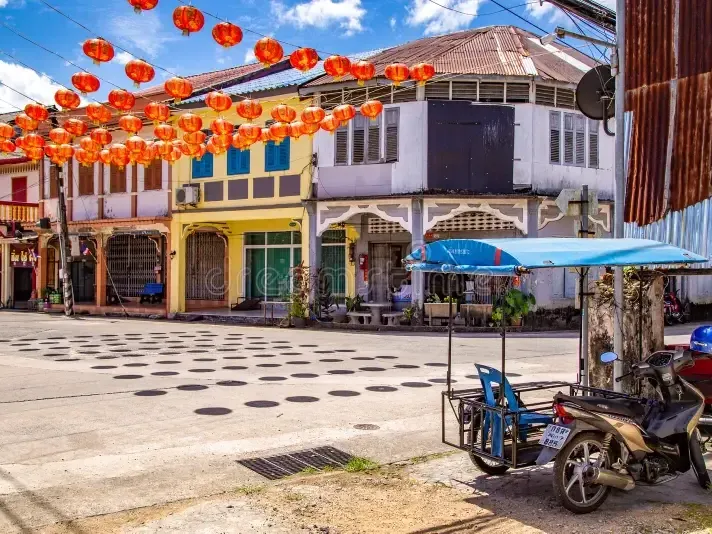
The historic heart of a district shaped by river, mine, and sea
Takua Pa is the principal town of Takua Pa District in Phang Nga Province — roughly midway between Phuket and Khao Lak on Highway 4 (Phetkasem Road). The municipality administers both the newer commercial centre along the highway and the older riverside quarter that visitors know as the Old Town.
Walking Sri Takua Pa Road, you pass Tao Ming School, Guan Yu Shrine, conserved kopitiams, and murals that celebrate Chinese-Thai identity. On Sunday evenings from November to April, the street fills with food stalls, crafts, and performances — a tradition that brings neighbours and travellers together without losing the rhythm of daily life.
Known to foreign traders as Tagola, Takua Pa grew into a vital Andaman port. Tin ore from Phang Nga's interior was smelted and exported here, drawing British, Chinese, and Malay merchants who left a lasting mark on language, cuisine, and architecture.
Wealth from tin dredging and mining funded ornate shophouses, schools, and bridges. The streetscape echoed Penang and Phuket — arched walkways, shuttered windows, and courtyard houses built for tropical rain and tropical trade.
As Phetkasem Road became the main artery, shops and offices moved inland. Talad Yai grew quieter but never empty — families maintained buildings, shrines, and recipes while the new town handled modern commerce.
Designated a historic town zone, Takua Pa Old Town combines conservation with community-led tourism — Sunday walking streets, restored landmarks, street art, and Thailand's first Green Destinations Bronze Award in 2026.
Where limestone bays, rainforest hills, and Andaman islands meet the mainland
Phang Nga stretches along Thailand's upper Andaman coast between Phuket and Ranong. Most international visitors know the province for Phang Nga Bay's karst islands and the beaches of Khao Lak — yet its character is equally rooted in fishing villages, rubber plantations, mangrove forests, and small towns like Takua Pa that remember the tin era.
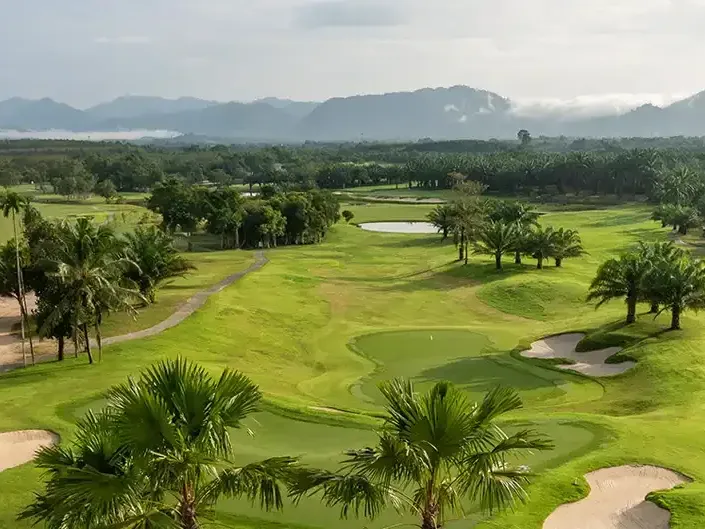
Boat departures from the coast reach the Similan and Surin island groups — among Thailand's best-known marine national parks.
Inland ridges rise behind coastal plains; mangrove estuaries and canals — including Sang Nae near Takua Pa — shelter rich bird and wildlife.
Buddhist temples, Chinese shrines, and Muslim communities reflect centuries of trade migration along the Malay Peninsula.
Beyond the headline sights, the province rewards travellers who explore old towns, local food, and community festivals away from the busiest resort strips.
Takua Pa Old Town is one piece of that wider story — a place to pause between island hops and beach resorts, and to understand how Phang Nga's people have lived with river, forest, and sea for generations.
Two-storey shophouses with five-foot ways, arched doorways, and stucco details were built for monsoon climates and community life at street level. Many façades in Talad Yai retain original timber shutters, floor tiles, and courtyard layouts — details that conservation projects and local businesses work to protect.
Look for arched ground-floor openings that keep walkways shaded in rain, second-floor balconies for ventilation, and mixed Thai–Chinese decorative motifs on shrines and school buildings.